Oak

Oak is a robust, durable hardwood with a distinctive grain. It is resistant to moisture and wear, making it ideal for furniture, flooring and interior design. Its warm colour palette ranges from light yellow to dark brown, giving rooms a timeless elegance.
What does oak wood look like?
Oak wood is defined by a striking, even grain with fine annual rings and occasional knots. Its colour palette ranges from pale yellow to warm brown and reddish tones, often with a natural sheen.
Oak is a natural material, so the appearance can vary. With solid oak in particular, no two pieces of furniture are alike.
Compared to wild oak or knotty oak, standard oak tends to use lighter timber with a calmer grain and fewer knots – resulting in a more uniform and composed overall appearance.
How is oak wood finished?
Oak is oiled, lacquered, or frequently white-pigment oiled (light finish). Heavily opaque stains can cause uneven colouration.
A lacquer seals the wood completely, while an oiled finish keeps the pores open – allowing the wood to breathe and regulate moisture. Oiled oak is slightly more susceptible to signs of wear than lacquered surfaces, but it is easy to clean and can be re-oiled whenever needed. Over time, scratches and stains are significantly easier to remove from oiled oak. Plant-based furniture oil is also a low-maintenance choice – its formulation is predominantly based on plant-derived ingredients.


Environmental profile of oak wood
Oak wood is a renewable resource and is regarded as a renewable, long-lasting material with low processing requirements. Its properties – durability, aesthetics, and versatility – make it a preferred choice across many applications.
1. Raw material sourcing
Oak trees grow primarily in the temperate climate zones of Europe, North America, and parts of Asia. In Europe, particularly in countries such as Germany and France, oak forests are an integral part of forestry. The ecological quality of oak wood depends strongly on certified forest management. Certifications such as FSC (Forest Stewardship Council) and PEFC (Programme for the Endorsement of Forest Certification) ensure that trees are harvested in a controlled manner and that new seedlings are replanted to maintain forest stocks.
2. Processing and energy input
Processing oak wood is energy-efficient compared to materials such as steel, concrete, or plastic. Energy input is limited to felling, sawing, drying, and any surface treatment. Modern technologies and energy-efficient drying processes have further reduced energy consumption in the timber industry.
Transport is one of the main challenges in the responsible use of oak wood. As oak is traded internationally, long transport routes can increase the CO₂ footprint. Sourcing oak regionally minimises this impact while supporting the local economy.

3. Durability
Oak wood is known for its high longevity. Furniture, flooring, and structures made from oak can be used for decades without losing their function or aesthetic appeal. This long service life reduces the need for frequent replacement, conserving resources in the process.
4. Reusability
Through recycling systems and bulky waste collection, oak is largely incinerated in biomass power plants. During combustion, the CO₂ that the tree previously absorbed from the atmosphere is released, generating energy in the process. From an ecological standpoint, however, the material's excellent repairability is the more compelling advantage. In furniture applications, oak can be glued, sanded, or re-oiled after damage or wear – restoring it to a like-new condition.
5. Biodegradability
Oak wood is a fully biodegradable material. In nature, it breaks down and returns to the soil as nutrients. Unlike plastic or other synthetic materials, oak leaves no toxic residues.
Technical properties of oak wood
| Property | Value |
|---|---|
| Wood type | Hardwood |
| Density (bulk density) | 0.65 – 0.75 g/cm³ |
| Compressive strength | 47 – 52 N/mm² |
| Bending strength | 90 – 100 N/mm² |
| Brinell hardness | 34 – 37 N/mm² |
| Modulus of elasticity | 10,000 – 12,000 N/mm² |
| Resistance | Highly resistant to abrasion |
| Weather resistance | High, particularly as heartwood |
| Colour | Pale yellow to dark brown |
| Workability | Good, though high tool wear due to hardness |
| Applications | Furniture, flooring, staircases, facades, barrels |
Oak wood at ekomia
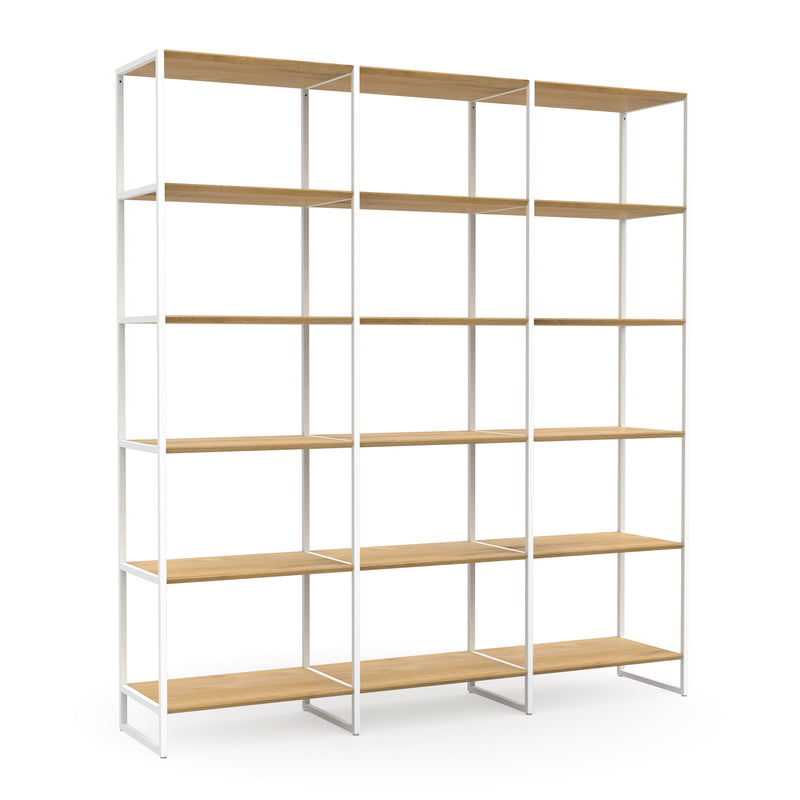
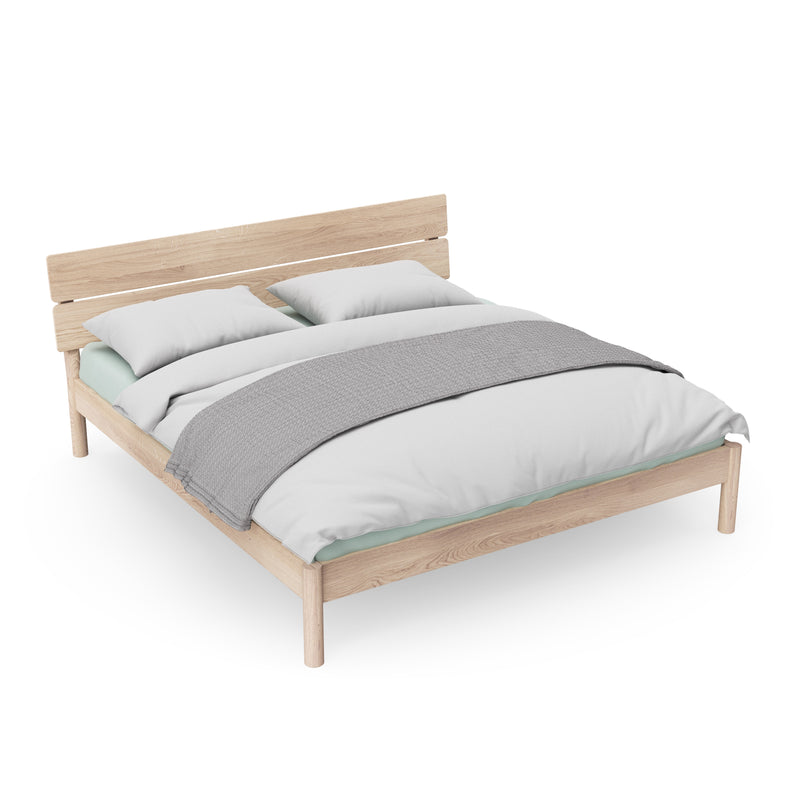
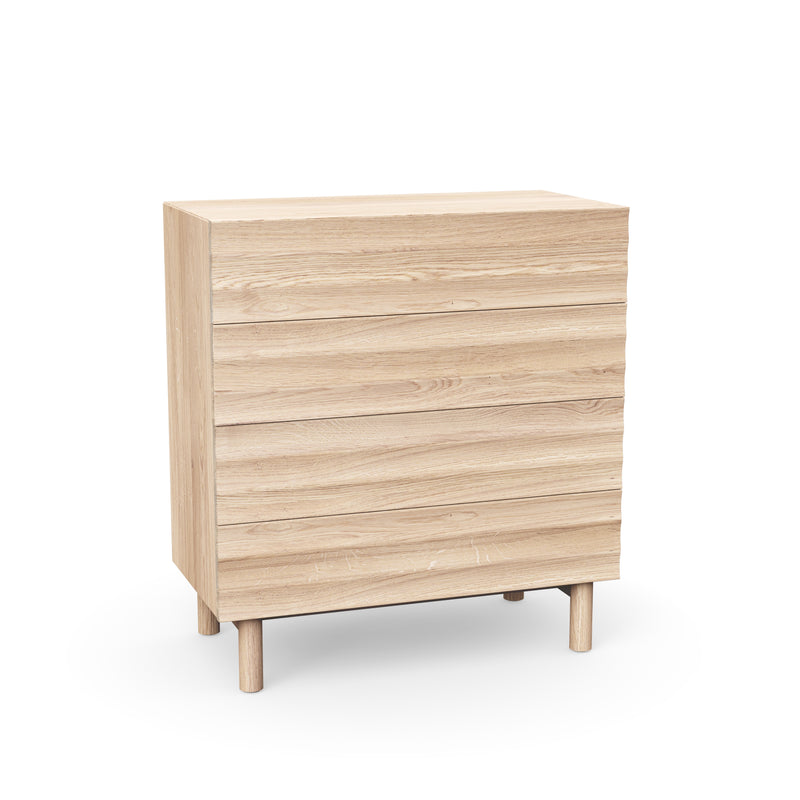
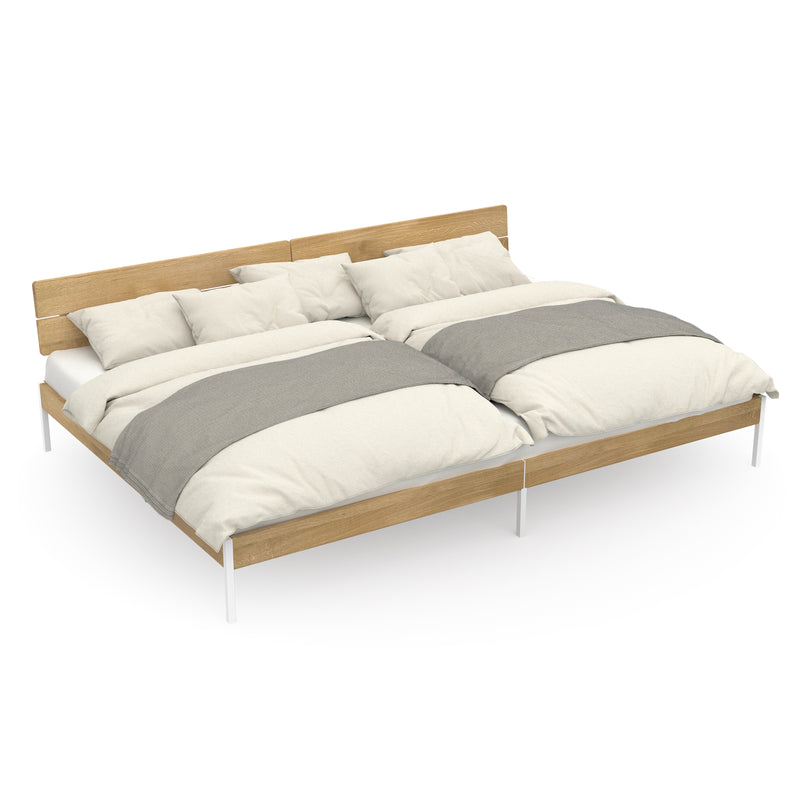
Thanks to its excellent mechanical properties and aesthetics, we frequently use oak across our collections.
We source exclusively European oak from FSC- or PEFC-certified forestry.
We finish with a plant-based, vegan furniture oil – keeping the wood breathable and easy to repair when needed.

Questions & answers for Oak
Here we answer some questions about Oak that are frequently asked by other users.
Matching Products
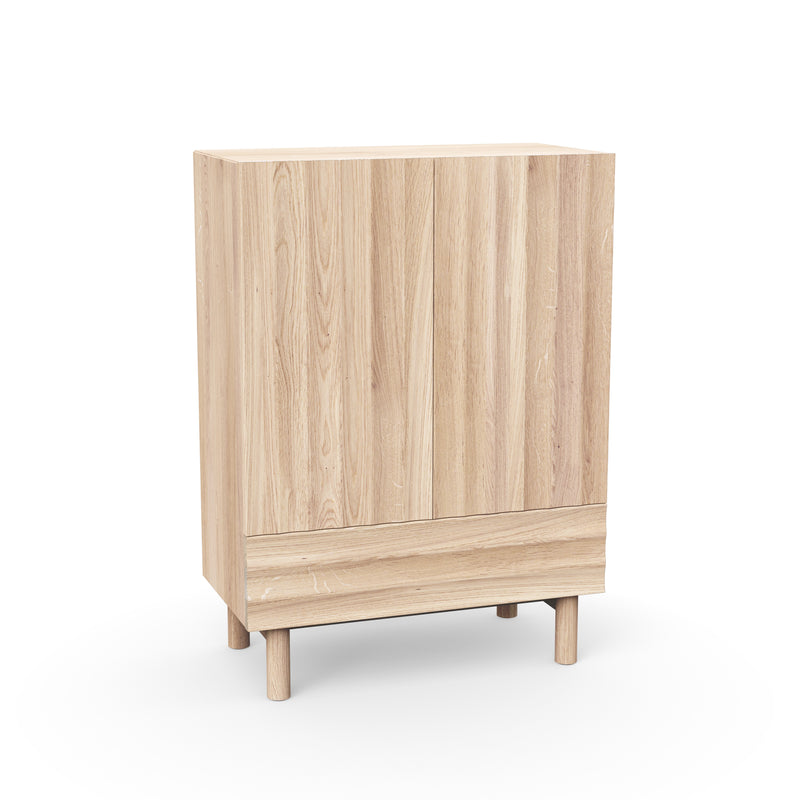
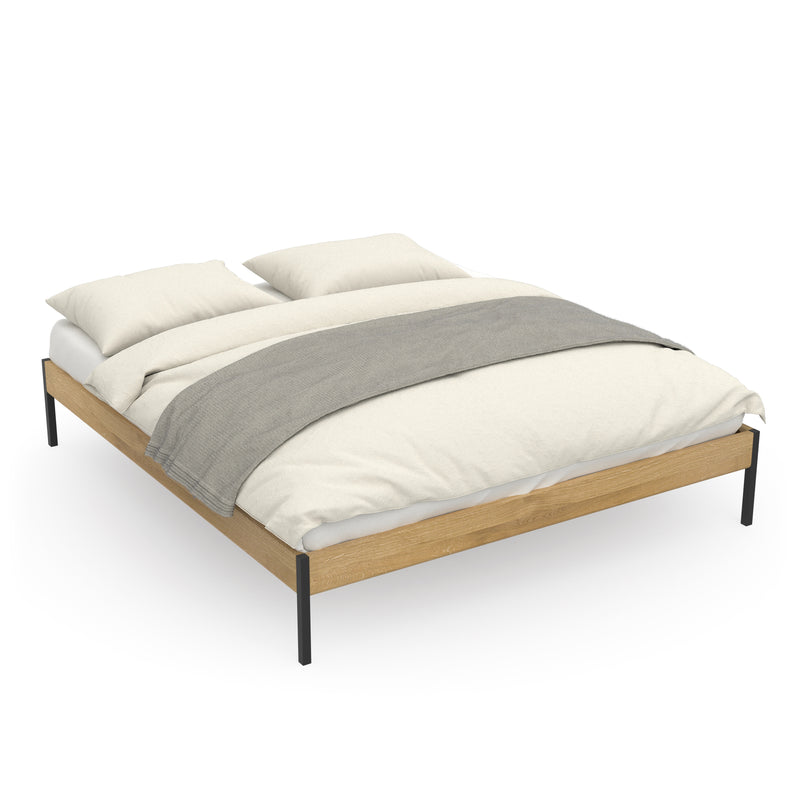
Have we piqued your interest? You can find matching products here.






Do you still have any questions?
Do you have any questions or comments on this topic? Write a comment, we will be happy to answer.