Natural Latex

Natural latex is an elastic material obtained from the sap of the rubber tree and is known for its high adaptability and breathability. In the furniture industry, natural latex is mainly used in upholstered furniture and mattresses because it offers natural flexibility and good pressure relief.
What is natural latex?
Natural latex is a purely plant-based material known for its exceptional elasticity, breathability, and durability. It is obtained from the milky sap of the rubber tree (Hevea brasiliensis) and has a wide range of applications – including the production of mattresses, cushions, and seals.
The material is characterised by a fine, even structure that results from its natural origin. Depending on processing, the colour ranges from milky white to a pale yellow. Under certain lighting conditions, natural latex can also display a subtle, natural sheen.
As a natural product, properties such as colour, texture, and firmness may vary slightly from batch to batch – a mark of the material's authenticity and integrity.
Please note: Natural latex is not a protected term. Even materials that contain only a small proportion of natural rubber tree latex and are mostly made from synthetic latex may be labelled as natural latex. Always look for the designation 100% natural latex to ensure you are getting pure, genuine latex.
How is natural latex produced?
-
Raw material extraction
The production process begins with tapping the rubber tree. The bark is carefully scored so that the milky plant sap – known as latex milk – flows out. This natural liquid forms the basis for all subsequent processing steps.
-
Filtration – purifying the natural latex
After harvesting, the latex milk is filtered. This mechanical process uses fine sieves and filters to remove unwanted particles and impurities – the essential first step towards a high-quality, pure raw material for long-lasting products.
-
Vulcanisation – the core of latex processing
The most important processing step is vulcanisation. The filtered latex milk is combined with a mixture of sulphur and other natural compounds under heat. This process cross-links the latex molecules and gives the material its defining properties:
✔ Dimensional stability ✔ Elasticity ✔ Durability
This technique makes natural latex ideal for products subject to sustained use – such as natural latex mattresses, seat cushions, or ergonomic furniture components.
-
Foaming for added comfort
For applications in the bedroom or living room – such as mattresses or sofa cushions – the latex is additionally foamed. Air is incorporated into the structure to make it softer and even more breathable. The result: a particularly conforming and comfortable feel.
-
Shaping and drying
The latex mixture is then poured into specialist moulds – for example mattress cores or cushion forms. It is subsequently dried in specialist ovens to draw out moisture and make the material resilient.
-
Finishing – the final touch
Finally, the natural latex can be refined. This may include treatment with natural oils to improve the surface structure, or covering with breathable fabrics – depending on the intended application and design requirements.


Environmental profile of natural latex
As natural latex is made from renewable raw materials and is biodegradable, it is considered a biodegradable material based on renewable resources. But how does natural latex perform in terms of its overall environmental profile?
1. Raw material sourcing
Natural latex is obtained from the sap of the rubber tree (Hevea brasiliensis). Tapping the tree does not damage it, allowing it to be used for decades before it is felled.
Plantation-style cultivation results in reduced biodiversity, and the loss of agricultural land should be viewed critically. For this reason, certifications are essential to ensure that the sap comes from certified sources.
2. Processing and energy input
The entire process from extracting the rubber sap to the finished product is energy-efficient and significantly less resource-intensive than the production of synthetic materials.
As the rubber tree grows primarily in tropical regions such as South-East Asia and Central America, natural latex can only be produced in a resource-efficient manner locally. Importing it to Europe unfortunately generates significant CO₂ emissions during transport for further processing.
The greatest energy input occurs during vulcanisation. Natural chemicals such as sulphur are used here to enhance the material's positive properties. Compared to plastic production, natural latex requires no plasticisers or synthetic chemicals.

3. Durability
Natural latex is known for its exceptional longevity. Mattresses and cushions made from natural latex offer high elasticity and retain their shape over many years. This durability reduces the need for frequent replacement, saving resources and minimising waste over the long term.
4. Reusability
Natural latex is theoretically well suited to recycling. There is a growing number of initiatives to collect and recondition natural latex products. Particularly in the mattress sector, the reuse of natural latex is gaining traction. However, these developments are still in their early stages – at present, the majority of natural latex mattresses are thermally recovered.
Natural latex is biodegradable. In nature, it breaks down without leaving residues and returns to the soil as nutrients. This makes it a biodegradable alternative to synthetic materials such as foams or plastics, which are not biodegradable and place a burden on the environment.
Technical properties of natural latex
| Property | Value |
|---|---|
| Raw material | Rubber sap |
| Density (bulk density) | 1.0 – 1.5 g/cm³ |
| Elasticity | Very high |
| Hardness | Variable, depending on mixing ratios and processing |
| Resistance | High resistance to wear and deformation |
| Weather resistance | Good, though sensitive to direct UV radiation |
| Colour | White to pale yellow |
| Workability | Good, with flexible and adaptable properties |
| Applications | Mattresses, cushions, seals |
Natural latex at ekomia
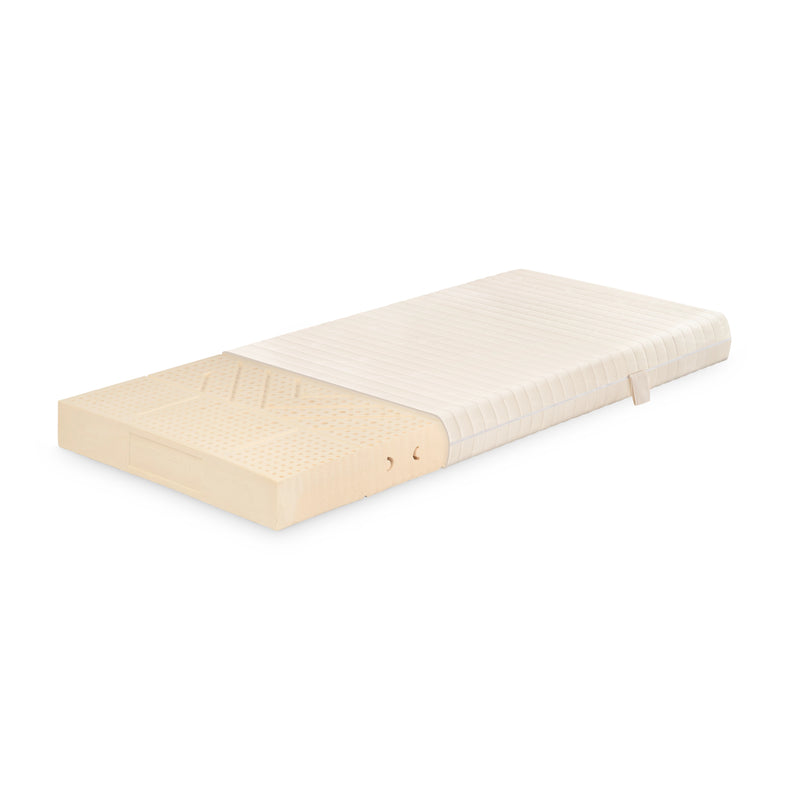
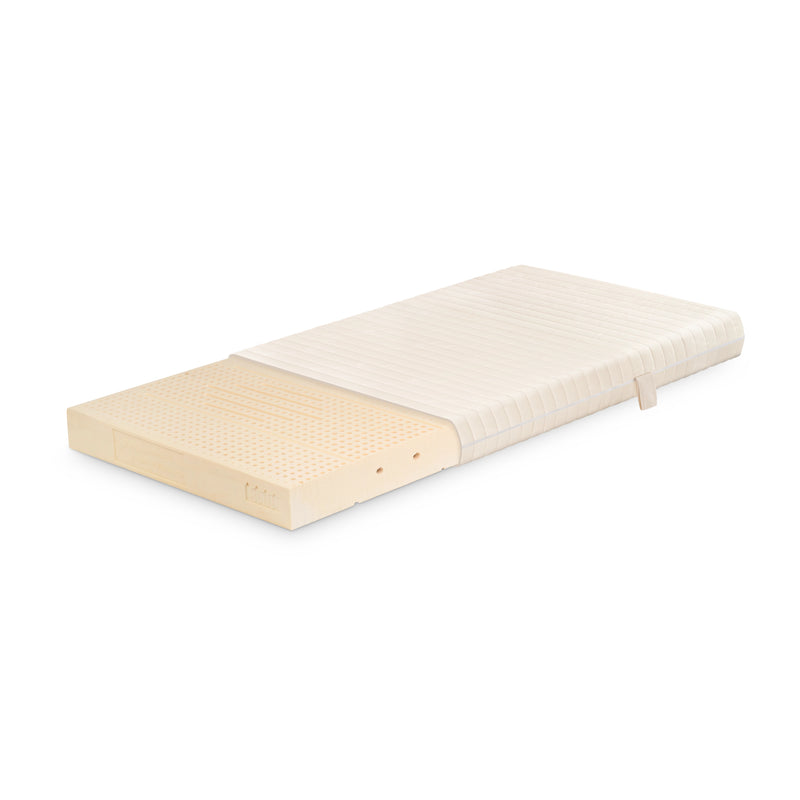
Thanks to its biodegradability, high comfort, and durability, we use natural latex as the primary material in our natural latex mattresses and in our modular sofa system.

Questions & answers for Natural Latex
Here we answer some questions about Natural Latex that are frequently asked by other users.
Matching Products
Have we piqued your interest? You can find matching products here.




Do you still have any questions?
Do you have any questions or comments on this topic? Write a comment, we will be happy to answer.