Ecological building: The straw bale house with ekomia furniture

How can building and living become more ecological? We asked Yarima and George, who live in Switzerland's first straw bale settlement.
A little about us: we are Yarima and George, 27 and 31 years old. Since December 2020, we have been living together with our dogs Emmie and Winston near Zurich in a newly built ecological housing development. Our ground-floor apartment is 72 square metres, spread across 3 rooms.
What makes your new home so special?
What makes this development unique is that it is the first straw bale settlement in Switzerland. In practical terms, this means that a layer of approximately one metre of dried, locally sourced straw insulates the exterior walls. The interior walls are made of wood, with one wall per room finished in white, breathable lime plaster. On the outside, the timber cladding is completed with a lime render facade.

How did you come across this building project?
Before this, we also lived in a large new-build development. Everything was predominantly concrete – sweltering in summer and uninviting and cold in winter. We were already familiar with ecological living from various holiday stays. During the lockdown in March 2020, we became more aware than ever of how much we longed for a more homely place with natural materials – primarily wood. As luck would have it, applications for an apartment in the straw bale development opened in spring 2020.
What does ecological building mean?
At its core, ecological building means that all construction materials are sourced in as resource-efficient and environmentally compatible a way as possible. The materials are also close to nature and contribute to the wellbeing of residents and the surrounding environment. Combined with the avoidance of artificial or even toxic substances, any eventual demolition of the building should be fully recyclable. Many conventional buildings are designed to minimise energy consumption during operation. What is often overlooked, however, is embodied energy – the energy required to manufacture building materials such as concrete.

How important is minimising living space in ecological building?
Most ecological buildings also consider the best possible use of living space, in order to maximise energy efficiency and reduce resource consumption further. By definition, compact living means a maximum of approximately 40 square metres per person. Here it is especially important to use rooms as cleverly as possible – rooms you spend the least time in are given the smallest footprint. Our bathroom, for example, is just 5 square metres, while our living and dining area is 35 square metres. Another way our development makes the most of available space is through large living room windows – spanning the full width of the exterior wall, they include a window seat and a built-in bookshelf.
Is the durability of the materials adequate? Is the risk of pests higher than with stone and concrete?
Ecological buildings are at least equal to conventional ones in terms of durability. They are also required to meet certain regulatory minimum standards, including durability and fire resistance. Since the straw is fully dried and built airtight into the walls, there is no risk of pest infestation.

How is energy saved during construction and afterwards?
Swiss building regulations allow the entire roof area to be fitted with solar panels. These generate sufficient electricity and feed any surplus energy back into the local grid.
How is insulation maximised without using synthetic materials such as polystyrene?
As described above, the insulation consists of approximately one metre of straw – which provides all the properties of conventionally manufactured insulation materials. As essentially a by-product, the straw can even be upcycled in this way and is fully biodegradable.
How is water consumption kept as low as possible?
The water and heating supply in our development is conventional. An app helps track water, heating, and electricity consumption. Other ecological buildings may also feature rainwater collection systems or pellet heating.

You chose ekomia to furnish the interior ecologically. What convinced you?
Our former neighbours already had an ekomia bed, which we found very appealing aesthetically. It was also important to us that our furniture is made from sustainably sourced wood. What won us over was the combination of clean lines, simplicity, and the solid wood look. Finally, we loved the small but carefully curated selection of pieces that work together – perfect for our new apartment.
What do you look for most when buying furniture and home accessories?
Furniture needs to reflect both our taste and the bright character of the apartment. It should be long-lasting and integrate well into the space. Combined with a certain presence in the room, a piece of furniture for us embodies cosiness and a sense of wellbeing.

Which ekomia products did you buy and how have you integrated them into your home?
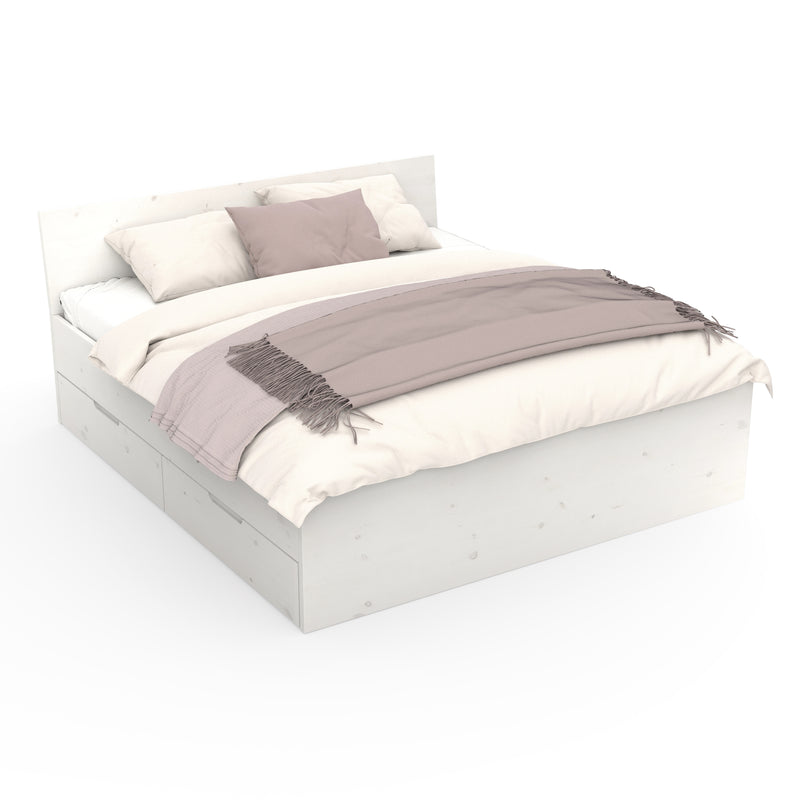
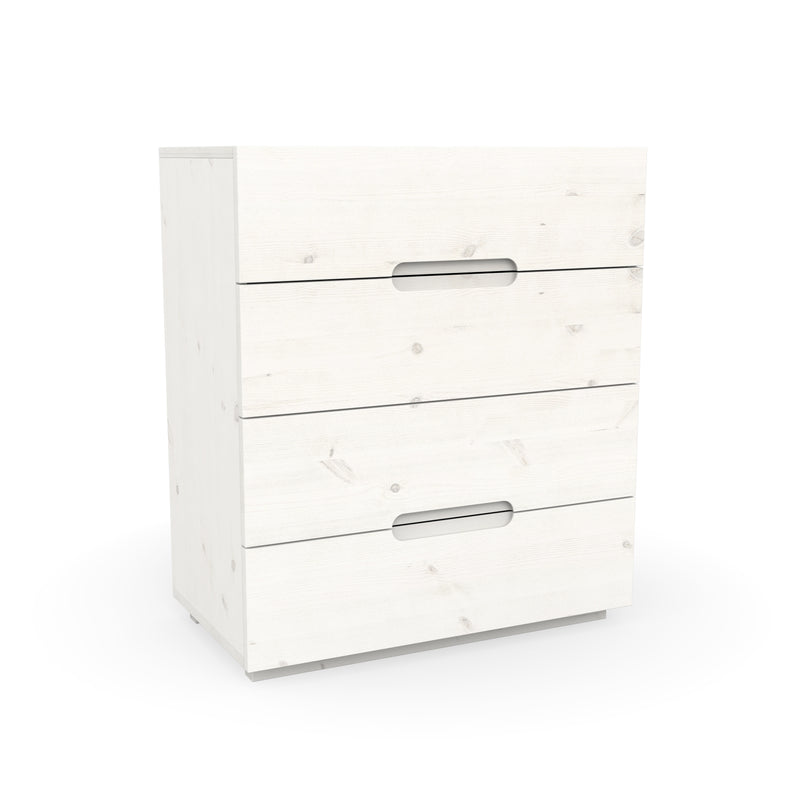
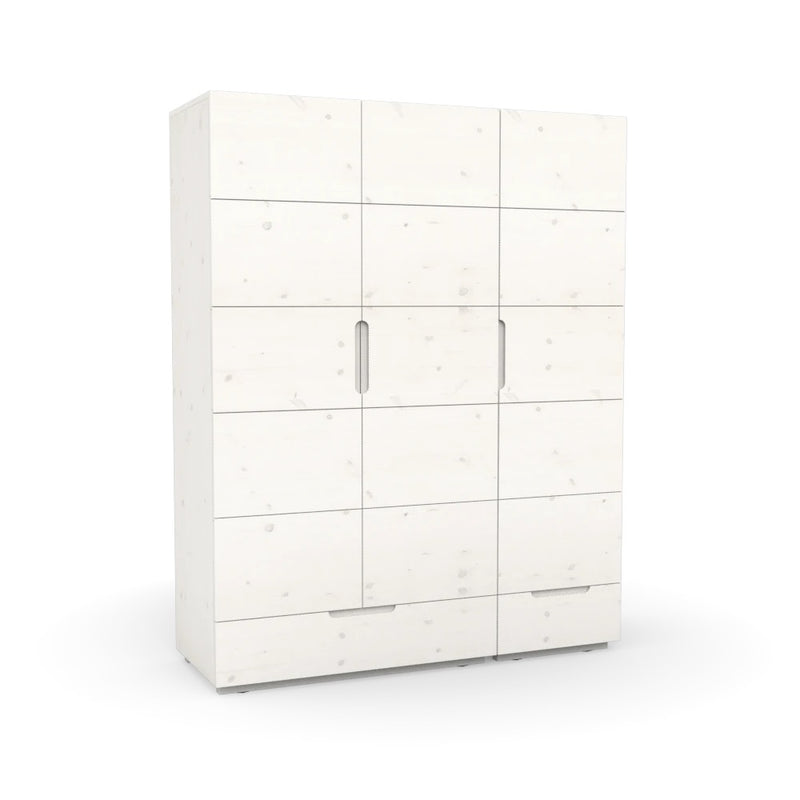
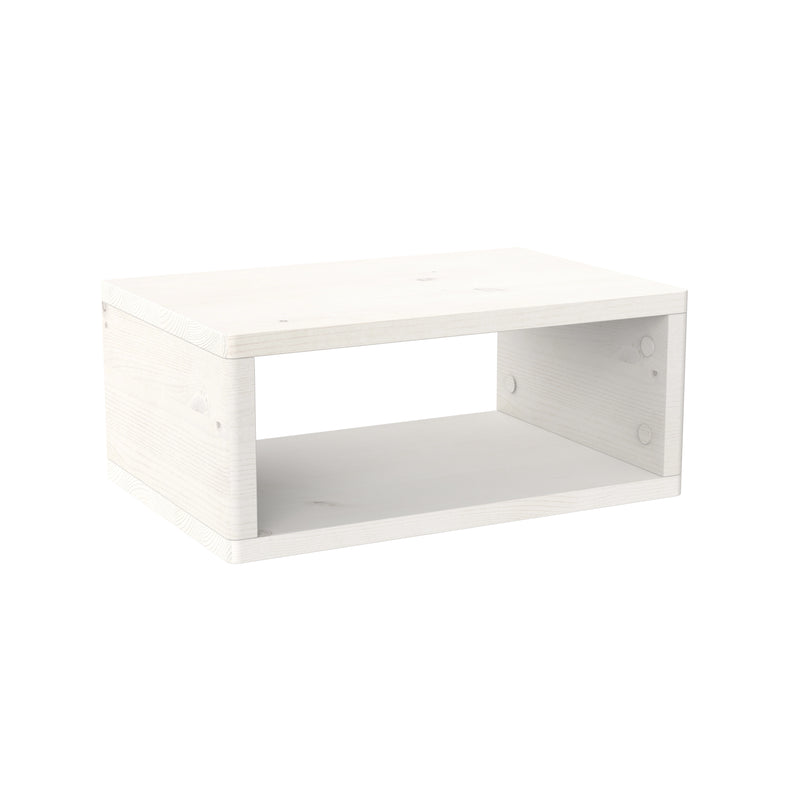
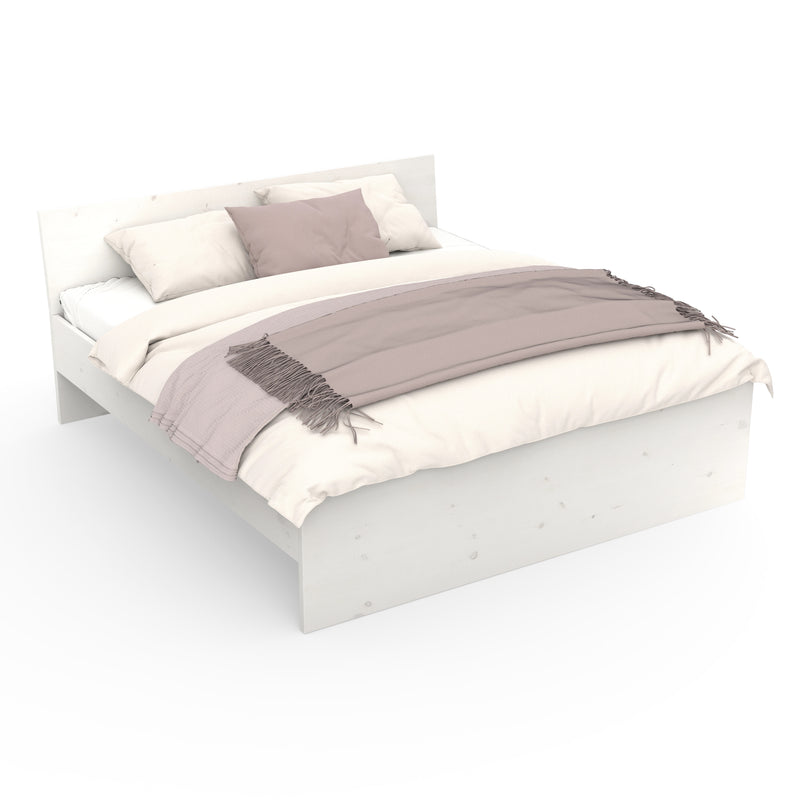
For the bedroom, we chose the Lade bed, the Enorm L wardrobe, and the Enorm chest of drawers. Next to the Lade bed is the Swebe bedside table, which is mounted to the wall. The bed was particularly important to us, as it can be ordered in a length of 2.20 metres. The colours of the furniture blend seamlessly with the wood of the ceilings and walls – visitors often ask whether the furniture was already part of the apartment. In the dining room, we opted for a Form A dining table along with a Form F bench and stool in light heartwood beech. The furniture harmonises perfectly with the beech wood used in the door frames and large windows. The option to customise all dimensions – including the height – allowed us to put together a table that suits our needs exactly. The bench can also be stored neatly under the table when not in use.
Matching Products
Have we piqued your interest? You can find matching products here.
Comments
Do you have any questions or comments on this topic? Write a comment, we will be happy to answer.