Pine

Pinewood is a light, versatile softwood with a lively grain and natural charm. It is easy to work with and is ideal for furniture, wall panelling and interior design. The colours range from light yellow to reddish brown and it takes oil and coloured glazes well.
What does pine wood look like?
Pine wood has a warm, natural appearance with clearly visible grain and occasionally prominent resin channels. Its colour palette ranges from pale yellow to reddish brown and deepens in tone over time.
As pine is a natural material, the appearance can vary. With solid pine in particular, every piece of furniture has its own individual structure.
Unlike knot-free pine, more rustic versions deliberately use timber with knots and a livelier grain – resulting in furniture with a characterful, natural look.
How is pine wood finished?
Pine is commonly oiled, waxed, or stained. Pine wood absorbs oil and colour pigments well, making it well suited to coloured or more opaque stains. With some stains, however, knots can bleed through over time and leave marks.
Lacquered surfaces offer strong protection but often look less natural. Oiled pine can breathe and regulate moisture. It is easy to maintain and can be re-oiled or sanded back as needed – ideal for everyday use and a long service life.


Environmental profile of pine wood
Pine wood is a renewable raw material and one of the regionally available softwoods in Europe. It grows quickly, is locally sourced, and generates low transport emissions – an advantage for the CO₂ balance.
1. Raw material sourcing
Pine trees grow across large parts of Europe, particularly in Germany, Poland, and Scandinavia. FSC- and PEFC-certified forestry ensures controlled harvesting and reforestation.
Pine monocultures have attracted criticism – when large areas are planted exclusively with pine, often for economic reasons. While these forests grow quickly and are easy to manage, they are considered ecologically problematic: they offer limited habitat for animals and plants, are more susceptible to pests, storm damage, and fires, and store less water than species-rich mixed forests.
In Germany and Central Europe, efforts are therefore being made to convert forests back into mixed woodland – partly to make them more resilient to the effects of climate change.
2. Processing and energy input
The processing of pine wood is particularly energy-efficient. It is easy to saw, plane, and dry – ideal for resource-efficient production. Regional sourcing also significantly reduces the CO₂ footprint.

3. Durability
Pine wood is long-lasting when properly treated. It is softer than hardwood, but easy to care for and repair when needed. With an oiled surface, it remains functional and attractive for many years.
4. Reusability
Wood cannot really be recycled in the conventional sense, but pine can be reworked, refinished, and reused effectively. It can be sanded, glued, or re-oiled – ideal for long-lasting furniture and creative upcycling projects.
5. Biodegradability
Pine is also a fully biodegradable material that breaks down quickly under natural conditions. In waste management (bulky waste), it is most commonly thermally recovered: during combustion, the CO₂ that the tree previously absorbed from the atmosphere is released, generating energy in the process.
Technical properties of pine wood
| Property | Value |
|---|---|
| Wood type | Softwood |
| Density (bulk density) | 0.45 – 0.55 g/cm³ |
| Compressive strength | 35 – 50 N/mm² |
| Bending strength | 70 – 90 N/mm² |
| Brinell hardness | 12 – 23 N/mm² |
| Modulus of elasticity | 8,000 – 10,000 N/mm² |
| Resistance | Adequate for indoor applications |
| Weather resistance | Low – only suitable for outdoor use with treatment |
| Colour | Pale yellow to reddish brown |
| Workability | Very good – easy to saw and plane |
| Applications | Furniture, interior fitting, panelling, mouldings, DIY projects |
Pine wood at ekomia
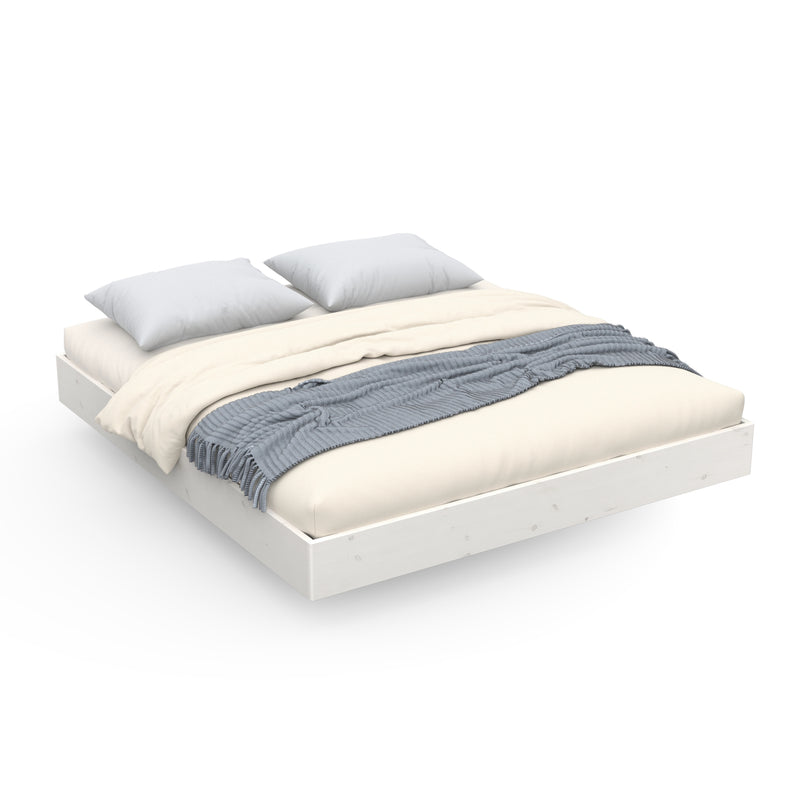
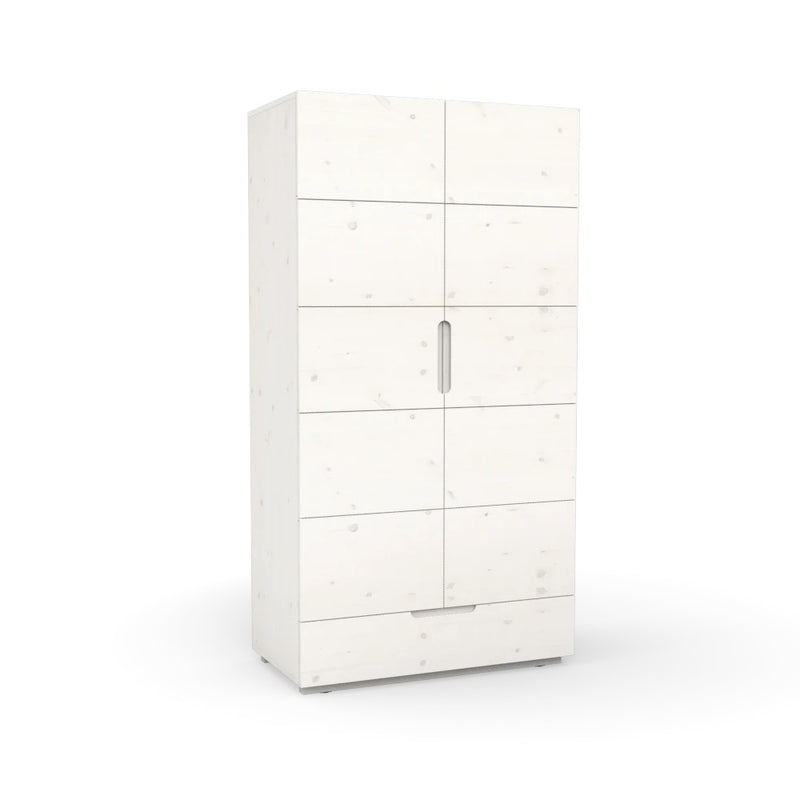
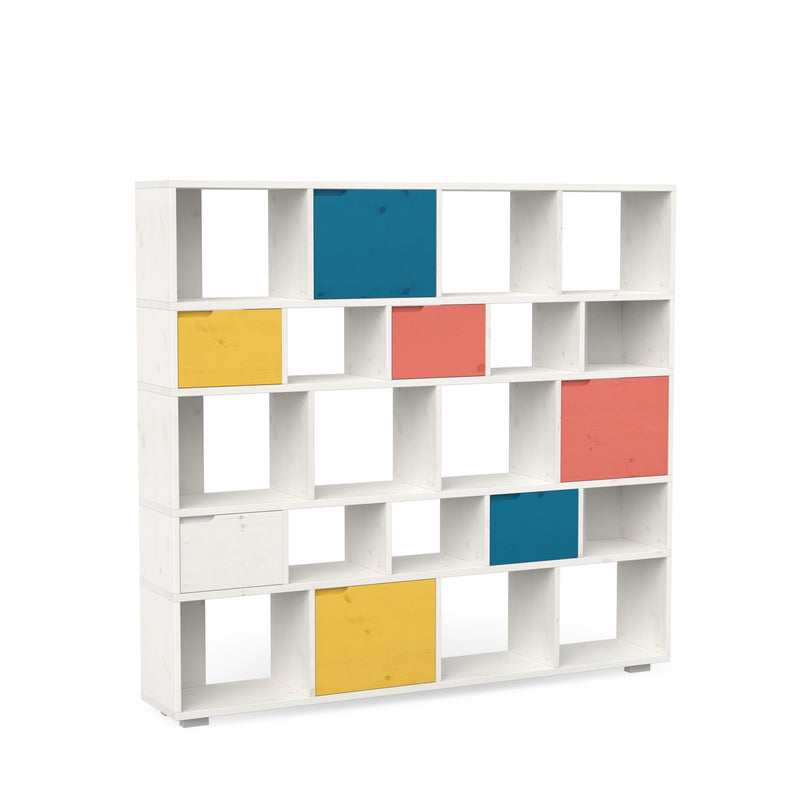
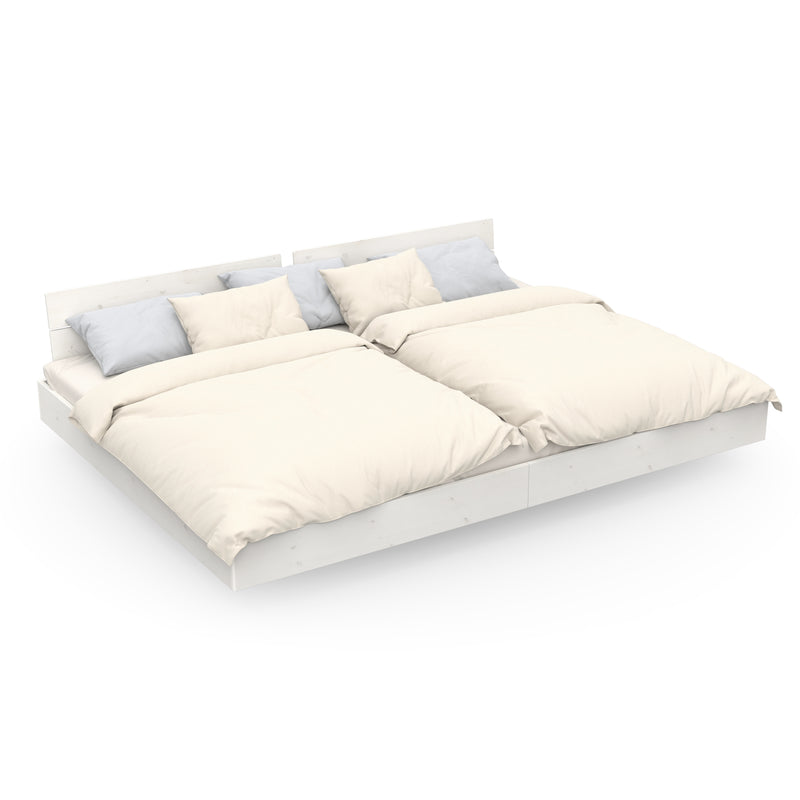
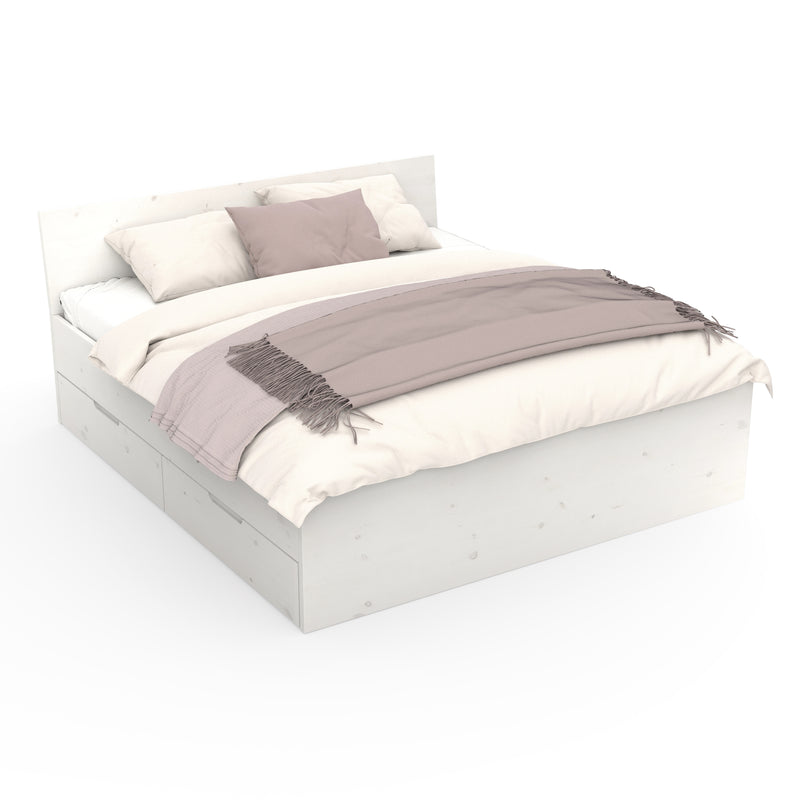
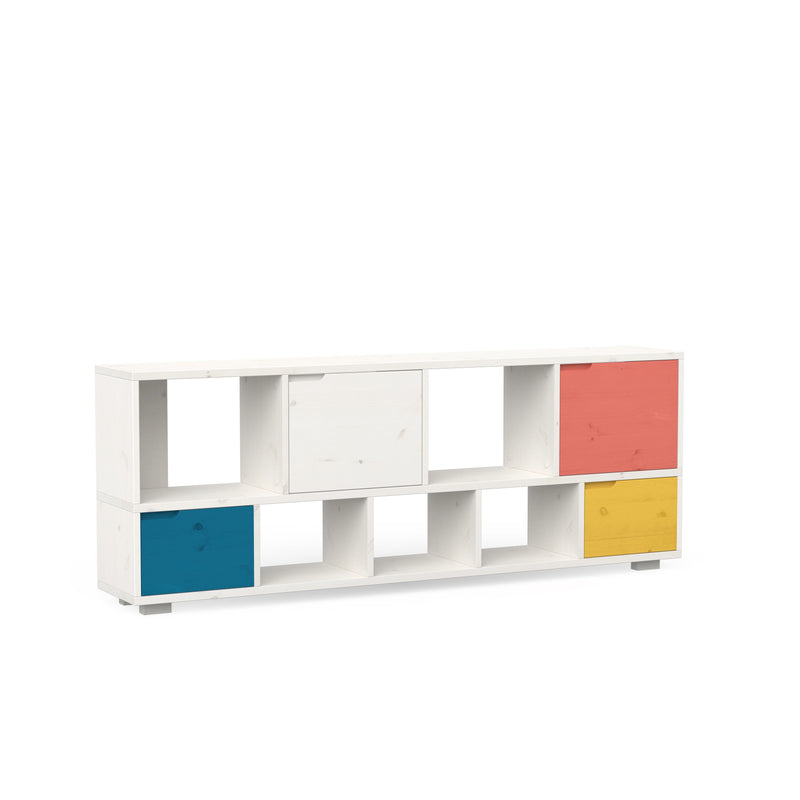
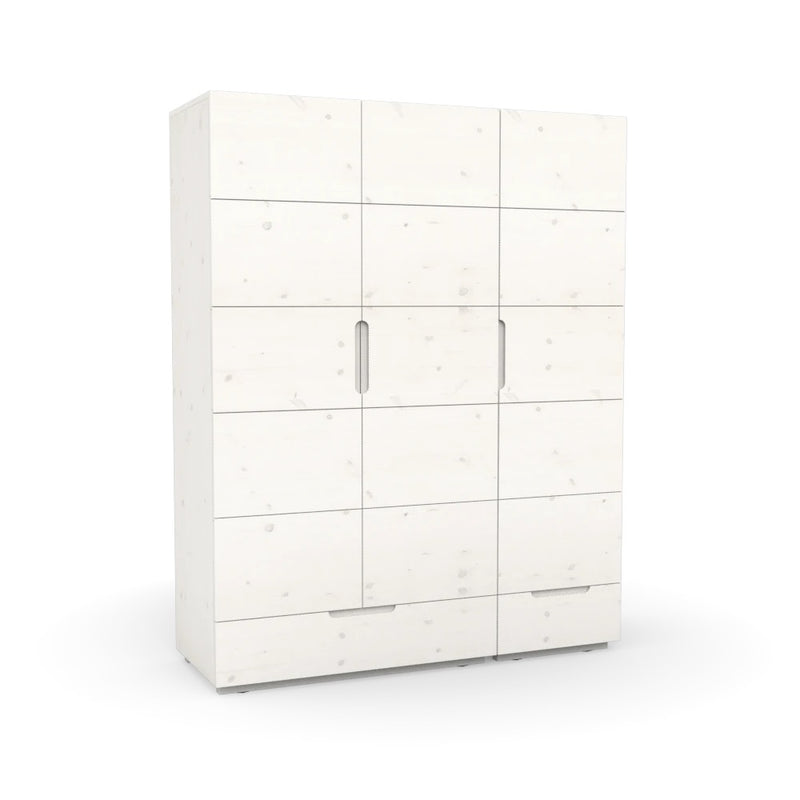
Pine is light, fast-growing, and one of the more affordable solid woods. Our first furniture collection (the Skandinavien collection) was made from pine with the goal of offering affordable solid wood furniture. To this day, it remains one of our best-selling ranges.
We use exclusively Swedish pine from FSC-certified forestry. Nordic pine grows more slowly, making it denser and lower in resin content than Central European pine – better suited to furniture production as a result.
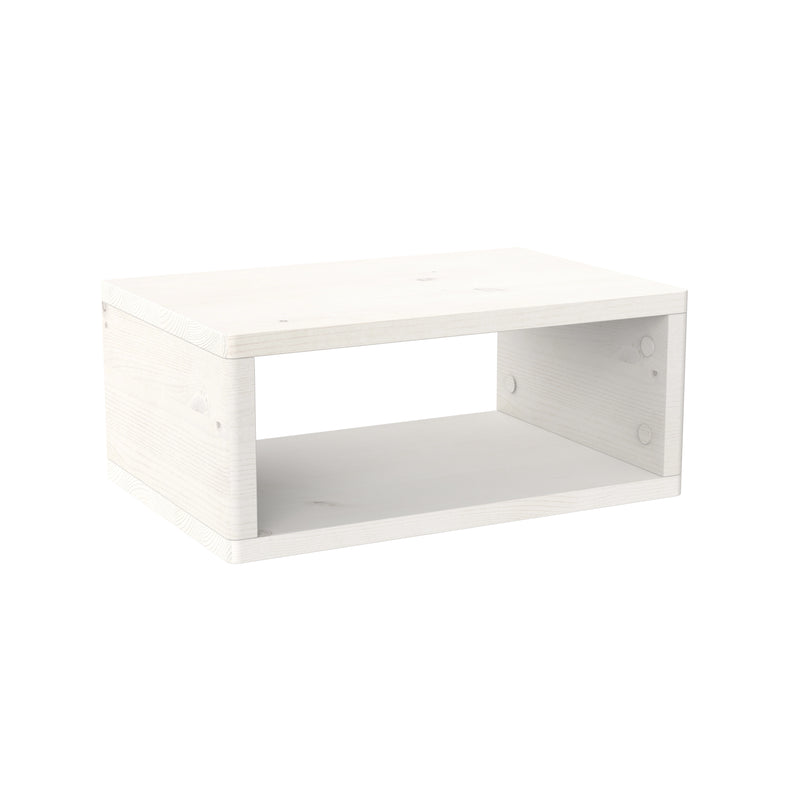
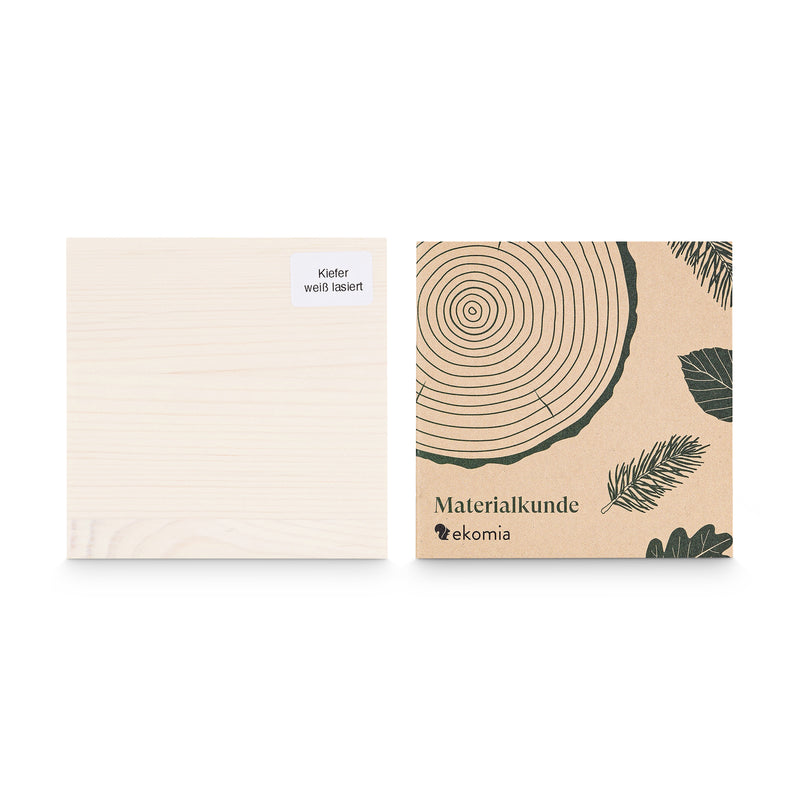
For aesthetic reasons, we always finish pine with a white, plant-based stain that does not cover the surface completely, allowing the grain to show through lightly.

Questions & answers for Pine
Here we answer some questions about Pine that are frequently asked by other users.
Matching Products
Have we piqued your interest? You can find matching products here.
Do you still have any questions?
Do you have any questions or comments on this topic? Write a comment, we will be happy to answer.